|
1
|
|
|
2
|
- Health Indicator Immunization of Infants (4weeks-1y/o)
- Objective: to increase the numbers of infants who are being immunized
- Importance and impact on society: risks of not immunizing, recent
debates
- What has been done in the past
- What is currently being done
- What could be done to overcome the problem
|
|
3
|
|
|
4
|
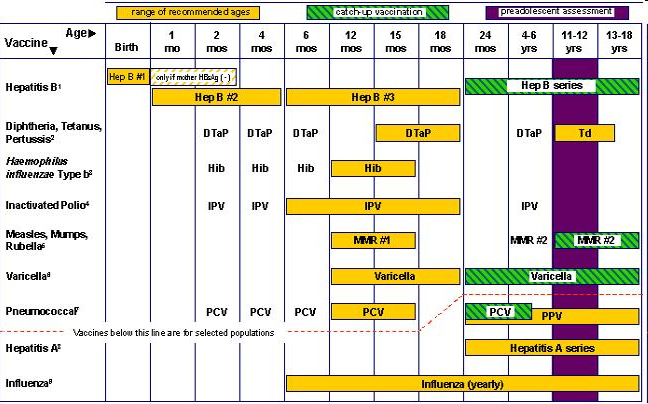
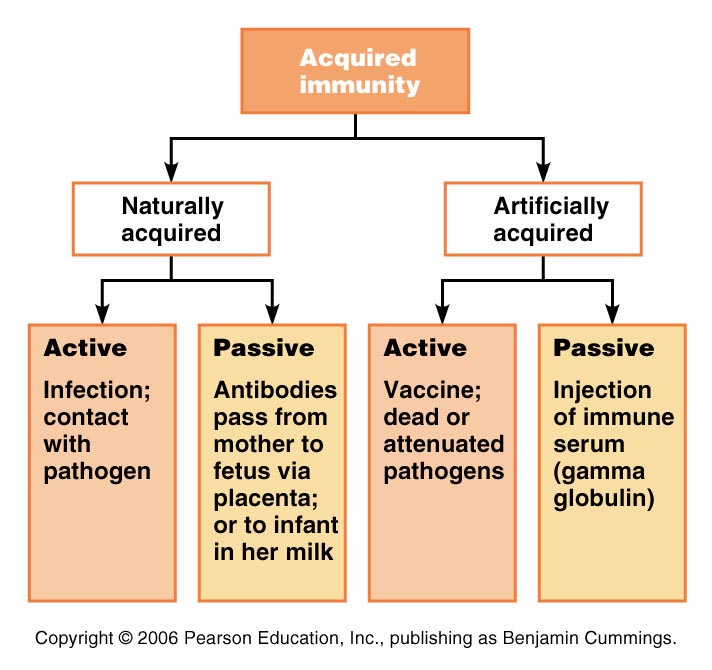
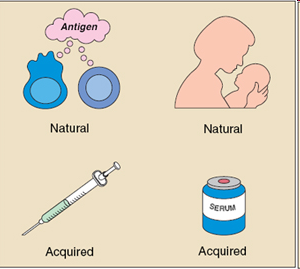
- Immunization
- -also called needles
- -help save lives
- -prevent serious illnesses
- -most effective health
intervention
- 14 serious disease
- -Diphtheria
- -Hepatitis A
- -Hepatitis B
- -Influenza
- -Measles
- -Mumps
- -Pertussis (Whooping cough)
- -Pneumococcal disease
- -Polio
- -Rubella (German measles)
- -Tetanus (Lockjaw)
- -Rotavirus
- -Varic ella (Chickenpox)
|
|
5
|
|
|
6
|
|
|
7
|
- “Breastfeeding is a baby's first immunization.”
- Breastfeeding should not be considered a substitute for immunization
- Some components of mother’s milk
may induce an infant's immune system to mature more quickly than it
would were the child fed artificially
- After vaccination, breastfed babies will produce higher antibody titers
to several common vaccinations in comparison to formula fed babies (Hahn-Zoric,
M., 1990).
- Exclusive breastfeeding reduce risk of allergic diseases, such as eczema
(19.4%), allergic rhinitis (22.6%), wheezing (12.7%) (Ehlayer
,M.S.,2008), and childhood asthma (15.6%) (Bener, A.,2007)
|
|
8
|
|
|
9
|
- Six states have achieved all of the Healthy People 2010 objectives on
breastfeeding. These states are Hawaii, Idaho, Oregon, Utah, Vermont,
and Washington.
- Only Oregon has achieved an exclusive breastfeeding rate above 25% at 6
months.
- Consistent with previous research, the NIS breastfeeding data reveal
that non-Hispanic blacks and socioeconomically disadvantaged groups have
consistently lower breastfeeding rates.
|
|
10
|
- Absence of immunization causes many horrible diseases.
- Lack of vaccine increases economical hardships for families and for the
society.
- Decreases quality of life patients have to miss school, work, suffer
pain and discomfort.
- Side effects may include pain at the injection site, rash, and mild
fever.
- In very rare cases side effects may include allergic reactions,
seizures, and coma.
- The medical professional have tried to educate parents in benefits of
vaccination.
|
|
11
|
- History of how Mercury was
introduced into vaccines
- Thimerosal, the most promising agent after WWI
- Safety Issues
- Mercury Autism Debate
- Public Scientism
- Government Response to public’s concerns
|
|
12
|
- Health Status
- Measured by birth and death rates, life expectancy, morbidity from
certain diseases, accessibility to health care and health insurance
- Policy on the Admission of Infants into
Day Care Centers
- Interview of Day Care Center Managers and Pediatricians revealed that
- children without immunization records can’t be accepted into school and
daycare centers
- Rates and Numbers: Childhood/Infant Immunization Coverage rates
- Childhood/Infant Immunization Coverage rates are above 90% in the US
- Adolescent and Adults are under 70% => in the US a financing system
and infrastructure exists for childhood immunization. Same
infrastructure doesn’t exist for adolescent and adults
|
|
13
|
- The reasons for refused to vaccinate are:
- __ Lack of information
- __ Misinterpretation of
available information
- __ Doubts about their safety
- __ Disbelieve in their
effectiveness (Fly)
- __ Side/adverse effects
(Autism)
- Its important for everyone to
understand that
- development of healthy life with a strong immune
- System begin from early age (infant) !!!
|
|
14
|
- United Nations Children’s Fund (UNICEF)-save, protect and improve the
lives of children around the world through immunization
- Expanded Programme on Immunization (EPI) program work to reduce
morbidity and mortality associated with vaccine preventable diseases
- Global Alliance for Vaccines and Immunization (GAVI Alliance) increase
children’s access to vaccines in poor countries
- Supplementary Immunization Activities (SIAs) reach children who are
missed in routine immunization
- AFIX (Assessment Feedback Incentives eXchange) improve vaccination rates
by raising immunization coverage levels and improve standards of
practices at the provider level
- Electronic Immunization Reminder Service mail message to parents
regarding which immunization are recommended for children
- Public clinics that provide free
immunization
|
|
15
|
|
|
16
|
|
|
17
|
|
|
18
|
- Educate the parents
- -Brochures in different
languages, explaining the importance and due dates
- -Health Care Professionals can
teach parents about: vaccine safety, proper handling of side effects and how to
keeping track of vaccinations
- WIC (Women, Infants and Children) – program for low income mothers that
requires immunization records to be eligible for food coupons.
- -Can provide free medical
facility centers to make necessary immunizations
- Health Care Coverage.
- -Newly arriving immigrants
should be given applications to apply for insurance right when they
arrive to U.S. and at offices such as:S.S.
|
|
19
|
- Needles free vaccination
- -decreases pain &discomfort
- -decreases risk of contamination, waste disposal product
- -“Intercell USA” uses a patch, it’s moving toward FDA approval; it can
be mailed and self applied on a skin.
- -Dr. David Edwards at Harvard University is working on Nanoparticle
Aerosols, vaccines that can be inhaled.
|
|
20
|
|

 Notes
Notes